Adsense

Showing posts with label Himalaya. Show all posts

Friday, January 28, 2022

HOW TO SELECT YOUR TREKKING SHOES.


HOW TO SELECT YOUR TREKKING SHOES.


Stomping through the woods or on mountains on a rigorous hike gets more exhilarating with each step. But are your feet as excited as you ? Your feet take on the bulk of the work on trekking or hiking excursions, so it's important that they have the right padding and protection.


Choosing the right trekking boots is a matchmaking process. Your dream hiking boots need to sync with how and where your hike or trek. Before you tie the knot, though, you also have to be sure they are a perfect fit. 


You have a dizzying array of choices, from ultralight trail shoes to mountaineering boots.Understanding a  little more about what goes into uppers, lowers, mid-soles, out-soles and other parts of a boot can help you refine your selection. No one ever loved a pair of ill-fitting boots. The difference between blisters and bliss is taking the time to get a great fit. 


Trekking shoes are one of the essential equipment when it comes to trekking in India or Nepal, especially in the Himalayas. It can break or make your trek, especially while trekking in the high altitude regions of the Himalayas. Your dream walk boots will synchronise with where and how you walk. But you must also be certain that they are a perfect fit before you tie the knot.


Trekking shoe is very different from your normal running or sports shoes. There are a lot of features in the shoe that help you get through different kinds of terrain, weather and support your feet and ankle while you walk.


Key features of trekking shoes are :

1. Good grip and traction for all different kinds of terrains without slippage.

2. Built material which helps protect your feet from getting hurt or twisted.

3. Waterproofing for different kinds of weather.

4. Durability and usage for a long period of time.

5. Cushioning, comfort and breathability for long hour hiking / trekking.


What you should keep in mind before buying a trekking shoe ?


There are four important factors which have to be taken in consideration before you buy trekking shoes :

1) The kind of terrain on which you will be trekking - paved trail or uneven rocky terrain.

2) Duration or the number of days you would be using the shoes, ie weekend treks vs expeditions.

3) Weather conditions on the trek, ie monsoon trek vs snow trek.

4) The weight you will be carrying on you, ie backpack weight.


So, there are three types of shoes you can buy from the market. Hiking shoes which are less expensive and good for short hikes. Trekking shoes for a high altitude trek for a week to 10 days , and Expedition boots for multiple days high altitude with shock resistance and extreme weather. 


HIKING SHOES :


If you are trekking on a well-paved hiking trail like Kheerganga or Nag Tibba, this is the shoes you can get as there is less chance of ankle twisting or your foot getting hurt due to harsh terrain.

Buy hiking shoes when you are trekking in summers  or dry weather as they are made of breathable material but not advisable for rainy or snow trails as they are not waterproof.

Weight of the backpack should be less as hiking shoes are made of flexible soles and low cut with no ankle support.

Hiking shoes are light weight, breathable, flexible sole, low cut with no ankle support. The price normally varies around Rs. 2000/- to Rs. 3500/-.

Some brands available are - Quechua, Forclaz, Adidas, Soloman, Woodland, etc.


TREKKING SHOES :


If you are trekking on an uneven/rocky trail like Hampta pass or Sar Pass or Dhaulagiri trek you have to get a trekking shoe which will give you more ankle and feet support as it is made of stiffer construction.

This is a shoe for all weather as it is waterproof and can be bought when going on a snow trek or monsoon trek.

If you are going on multiple day hikes / treks you can get these as it helps reduce the burden on feet and ankles.

On multiple day hikes / treks, the load of the bag will be much more so the stiffer material gives your leg muscles the support it requires.

Trekking shoes are heavier / stiffer material for toe and feet support, mid-size ankle support, good anti-slip outer sole. The price is around Rs. 4000/- to Rs. 6500/-.

Some brands available are - Quechua, Woodland, Wildcraft, Solomon, etc.


EXPEDITION BOOTS :

These boots are great for any type of weather mostly during extreme cold weather as they have extra insulation for your feet.

If you are going on a long expedition choose these boots for ankle and leg support as well as comfort.

Expeditions will require you to wear heavy clothing and backpack which in turn puts a lot of pressure on the feet. With good ankle and leg muscle support and slip resistance feature will keep your feet intact.

Expedition boots have high rise for ankle and leg support, shock resistance, anti slip resistant and good insulation for extreme weather. The price range will be around Rs. 5,000/- to Rs. 10,000/- .

Some brands available in India are - Dynafit, La Sportiva, etc.


HOW TO SELECT YOUR TREKKING SHOES ?


Concentrating on our today's blog title - HOW TO SELECT YOUR TREKKING SHOES, let us understand it's construction and aesthetic which determine the durability and comfort of the shoes.


The trekking shoe has 3 main components to it's construction : The upper, mid sole, and the outside sole.


1. The Upper : the upper part affects the shoe's weight, longevity and water resistance. The upper layer is also important to ensure that your feet are ventilated properly. The top section of the shoes consists mainly of two substances - Leather and synthetic. 

The best way to ensure longevity, safety and comfort are to have leather shoes. Aesthetics and waterproofing are influenced by the form of timber. But you can use synthetic leather with the same versatility as leather if you want your shoes to be a vegan option. 


2. Mid sole : "Sole is the Soul of a shoe", it is the sole that a shoe is comfortable & stable. This keeps the shoes comfortable and coats the feet. Therefore, it is difficult for a sole to shield you on rough, rocky terrain from an abrasive shock. Ethylene-vinyl acetate and polyurethane are the most popular materials you can find in your sole. 


3. Outer sole : The lug patterns of your shoes at the bottom determine your grip on mountain trekking. It facilitates your grip on mountain trekking. It facilitates your journey by gravel, trail or ground. The deeper and denser the pattern of the lug, the more it tracts your feet. 

The elevated area of the heel at the foot of your shoe, also known as the brake, reduces your chance of descending steeply. 


Some of the Best Trekking Shoes available in India :


Find below some of the best trekking shoes available in India with an average rating of most than 4 out of 5 by customers. This list has been prepared after comparing more than 54+  shoes by different brands like Solomon, Quechua, Wildcraft, Adidas, Columbia, and Woodland on different websites like Amazon, Decathlon store, Flipkart & Wildcraft stores. The price range of these trekking shoes is from Rs. 3,000/- to Rs. 13,500/- (prices may vary according to time & offers) :

1. Solomon Synthetic Quest Prime GTX mid ankle hiking shoe.

2. Forclaz Trek100 men's trekking shoe.

3. Quechua women's hiking shoes MH100- Brown.

4. Woodland men's boot - Grey.

5. Quechua Forclaz 100 mid WTP shoes for men.

6. Columbia Men's Redmond Mid waterproof hiking shoes for men.

7. Columbia women's Newton Ridge Plus Sued Leather trekking shoe.

8. Quechua men's snow hiking shoes SH520 X-Warm mid.

9. Wildcraft Hypagrip TRKNiQ X (trekking shoe for women).

10. Wildcraft Hypagrip TRKNiQ Argon 2.0 (trekking shoe for men).

11. Furo by Red Chief for men's hiking shoes. 


Myself have noticed that, trekkers are perpetually confused about which trekking shoes to buy. There are so many options in the market these days, with costs climbing as high as Rs.35,000/-. 


Most of the trekkers want to own a pair of trekking shoes, instead of getting a pair on rent. Which is why I started looking out for good trekking shoes that do not burn a hole in your pocket.


Many of my trekking friends have suggested the NH150 Trekking Hiking Shoes by Quechua, Decathlon*. Which is why I wanted to test it out. This shoe was tested on the Gidara Bugyal trek, a moderate-difficult Himalayan trek, in snow, slush and small stream-crossing. This shoe is very much budget friendly at Rs. 2500/- approx. 


Decathlon marks this as off-roading hiking shoes, rather as trekking shoe, as a result most trekkers hesitate to buy this for a Himalayan trek wondering whether it will work or not. 


This shoe was tested on 4 aspects - Grip in the shoe, Ankle support, Flexibility of the sole, and Water repellent. 


Grip in the shoe - 

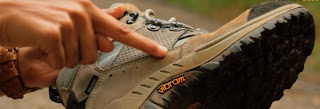
the sole is "cross contact sole" , this similar patern as in high end models of Decathlon shoes and many other shoes which cost Rs.5000 - Rs.7000/- . This worked perfectly well on the Gidara Bugyal Trek. 


Ankle support - 

in this respect many people doubt this shoe, but are not to be blamed because it has a very soft ankle support & people think that it needs to be more firm and padded to actually support your ankles. But this is not true, as it is the length of the ankle support that matters , this shoe with mid ankle length works perfectly well. 


Flexibility & cushioning of the sole -

this sole is extremely flexible, it worked great when on boulders when feet are in awkward positions. You feel an extension of your feet. 


Water repellent or waterproofing of the shoe - 
It performed well when walking in water as well, also while walking on shin deep snow it came out without getting wet. Parts on the top surface got bit wet but dried up pretty quick. The in-sole and socks did not get wet. 


At the end of the day if you ask me , I would definitely say yes, go for this shoe . Most people think the more you spend, the higher the quality of the shoe., if you ask me it is an endless journey. I always believe in - "SPEND LESS AND TREK MORE". You can even use this shoe even for tougher Himalayan treks like - Buran Ghati, Kedarkantha, Deoria Tal, Rupin pass, Goechala, and similar. This shoe will easily  last you on 6 - 7 Himalayan treks of this calibre. 


If you have used this shoe for yourself, would love to know your experience of it, drop in your comment below, even for any doubts write to me at partha63.pd@gmail.com .  


Do FOLLOW my BLOG PAGE for latest updates on FITNESS.


- My Facebook Page :       Fit & Fun After 50

- My YouTube channel :       fitnessfun50

- Follow me on TWITTER :  @ParthaD44328477

- Instagram :                         fitnessfun.50

- e-mail :                               partha63.pd@gmail.com


*This is not a sponsored Blog.

Sunday, October 17, 2021

HOW TREKKING CAN TRANSFORM YOU .


HOW TREKKING CAN TRANSFORM YOU.


In my this blog, will be shedding light on how trekking can transform you - your MIND, BODY and SPIRIT for Lifelong.


For all those who are into trekking, it is much beyond than just an activity. We who are hard core trekking enthusiasts have at least one strong vision - EVERYONE MUST TREK, because especially myself has seen how "Trekking Transforms Lives".


Though it looks an ordinary statement, but it has an enormous implication.


Just a small rewind to about 31 years ago when I first started trekking on off beat trails in the hills and jungles of Tripura & Meghalaya, two small North-Eastern states of India. Trekking then almost did not exist in the country as an activity. Yes, there were pilgrimage travels or "Tirth Yatras" as called in India, to holy places in the Himalays - like Kedarnath, Badrinath, Amarnath, Panch Kedars, Kailash- Mansarovar and few more, where the devotees would hike to reach the shrines, but then those routs were pretty tough, not as convenient as now. It was only the hard core veterans who trekked. There  was no information about trekking, there was no talk about safety, preparedness, nobody knew much about trekking trails, neither understood the potential and benefit of trekking.


We enthusiast trekkers want everyone to trek - regular people like us, our parents, young ones, students, everyone. I have seen trekkers come back and tell us that their lives have changed after a trek, their perspective and understanding about life has changed. 


Especially when you trek in the Himalayas, stand in front of a majestic mountain, your that feeling of being someone great in your society, among friends, or in professional life, your vanity, pride just vanishes in seconds, then you understand that we are just a spec on this planet. Considering the formation of the Himalayas which began 50 million years ago and continues today, we are just "Pop-ups", imagine how many like us have come and gone before us and will, after us, we then realise by our coming & going this Earth gets least effected. 


The majestic Himalayas by  it's grandeur, flora & fauna and mysterious nature makes us realise the nature of life that we are as created by that Eternal Source, our possibilities are limitless as compared to any other life on this planet, provided we realise our capabilities and move in that direction. 


During a trek you will realise that, how in most part of our active life we are too much engrossed in building career, family, fame, position, greed for excess wealth, status....... as if we are immortals, in this process have we ever thought how much time we really spent on ourselves, what have we done to attain that state of self realisation and be really in a state of joyful and contributed to other living beings and mother nature. 


Human body is a treasure per se and it should be nurtured as nature does to humans. Being passionate about trekking and fitness, I believe in the power of development of soul, body and mind through trekking. 


Let me narrate a small incident that myself witnessed during one of my treks in the Himalayas. It was September of 2003, as always was on a solo trek to the Tritiya (third) Kedar of the Panch-Kedars (5 Kedar Temples) "Tunganath - Chandrashila" in the Norther Indian state of Uttarakhand, in Garhwal district.  Tunganath Temple situated at an altitude of 3680 meters (12070 ft.), is the one of the highest Shiva temple located at second highest altitude in the world, after Muktinath (3710 meters) in Nepal. 


                                                              Tunganath Temple


Situated at an elevation of  about 3,690 metres, Chandrashila summit provides views of the Himalayas, including Nandadevi, Trishul, Kedar Peak, Bandarpunch & Choukhamba peaks. It was early morning, dawn was just breaking, and I had just reached the summit - Chandrashila, as I came up saw the magical sunrise happening in the mountains. One by one few other trekkers from Bangalore with whom I had met during my trek to Tunganath also came up, and more or less when every one were up at the summit I gave myself some time to experience the beautiful sunrise, these are some of the rare moments of life time, which we miss in our day to day city life. 


                                                               Chandrashila Summit


As myself was engrossed by the grandeur of nature, heard a noise as if someone was trying to climb up, bit surprised as nearly all those who trekked with me to Tunganath were already up at the summit, during those days this was not so much known trekking destination and only few trekkers would venture to these destinations. I just went to the edge and looked down, was immensely  astonished to find that  Mr. Karthik, one of the trekkers who was member of that group whom I had met and found him to be physically unfit for this trek & was suffering from mountain sickness and was advised to rest at  the Tunganath camp was struggling towards the Chandrashila summit. He was about 20 meters below the summit was laboriously making his way towards the submit. As he reached the summit he stood in front of  the shrine at the top of Chandrashila with folded hands with tears rolling down his eyes, he started weeping, then the weep became a sob and was crying uncontrollably. One of his fellow trekker went up to and gave him a warm hug to calm him down.
 

Later in the evening when I went back to the base camp, I asked Mr Karthik (I am still in contact with him) his story, his burst of emotions had much deeper past, he was in his mid 30's , he was recently promoted as a project manager in a renowned IT company at Bangalore, he was very surprised by this promotion as he was not at all expecting it. He was one of those very soft spoken, kept to the background but did his routine work very religiously and go home. He was someone who was under confident and lacked self-belief . This trek had a profound impact on Mr. Karthik, he discovered on his climb to Chandrashila summit that he had that inner resolve and inner strength which went much beyond himself. He realised that he could overcome difficulties that he did not know he was capable of, he was filled-up with positivity which no amount of pep talk or counselling could do, and this positivity stayed  with him for long, when he went home he was a changed person and this change was permanent. This is not a stray incident, I hear many such incidents from many of my trekking friends from all over the world.


The above incident reconfirms what scientists have been telling us for a very long time, that the mountains or trekking has a very big impact on our body, mind and spirit, a much bigger impact than what we ever imagined it to be. 


When we are on the mountains and we are trekking, we have nothing to distract us, it is just us and the nature. We are constantly surrounded by the positive imaginary of the nature, we are seeing mountains, valleys, snow, grass lands, meadows with herd of sheep grazing, forests, seeing sun rise, sun sets, moon rise , moon set, night sky filled with bright stars, this constant positive imaginary of nature surrounds us so much so that it removes any negative thoughts from our mind, forget negative thoughts it removes any thoughts from our mind. We even forget what day and time it is. 


This has a miraculous impact on our minds. It has a calming effect, the buzz that is in our mind starts to move and fade, the nerves try to sooth, we start feeling happier, we become lighter and laughter and smile flows immediately, there is a spring in our step. There is a science behind it, and the science that got to do with  hormones. During a trek we get a big boost of Endorphins - the hormone that makes us feel happy, we get a large boost of Serotonin - the hormone that relaxes us, there is also the push of Dopamine - the hormone that triggers our reward sense, makes us feel accomplished. Also, lots of Oxytocin gets pushed into us, these helps us to be in a feeling of tranquility, feeling of love , all these hormones put together makes us feel happy, collected and energised. 


Now, it is known to us that nature has a major impact on our mental state, this has been known to us for tens, hundreds and thousands of years, yet in the modern world we seem to be ignoring this. Forget about mental strength, trekking has a big impact on our body, one hour of trek can burn about 450-550 calories, imagine what a 5-6 hours of trekking can do, this is usually a trekking time in a day. 


Trekking uphill is almost like climbing stairs or doing lunges, our glutes, quads, hamstrings, calf muscles are working over and over and getting stronger. A trek is not on an even surface or on a road, our body is always making micro adjustments every second , every minute, no two steps are alike. These micro adjustments are done by our abs and lower back muscles, so, this is nothing but strengthening our core. If you are carrying a backpack it is an additional weight training. By strengthening of our core, scientist have told long ago that, if you want a longer and fitter body you need to have a strong core, because a core gives us a sense of balance and stability, and that is what the micro adjustments are doing, it is giving us a balance and stability as we are trekking.


How many years of trekking experience you may have , has little to do as every new trek will bring in new challenges and varied level of  difficulties, so one has to be always prepared before every trek.


The biggest impact of trekking is on the human spirit. Human spirit is nothing but the human nature that we are, the person we are, the person we become. Trekking repairs relationships together, making good friends, we become better human beings. Now, on a trek there is nothing to distract us, there are no electronic device, there are non who will interrupt your thoughts, the conversations you have with your trek mates are very honest, free and frank and free flowing. We have a common venture, sharing same tents, we are pitching our tents, rolling our sleeping bags, and a common adventure to navigate. This common adventure and free flowing conversations helps in forming  deep bonds with our trek mates. We allow ourselves to open up. During a trek people talk more intimately with their trek mates whom they are with for 5 or 7 days, than they did with friends of many years.


Now, in this modern world when acquaintances are fleeting and friendships are fickle, the chance to bond with somebody for life time can not be ignored. 


Treks help those who are struggling in life, facing difficulties, because a trek is almost like a journey of difficulties which mirrors it, in a trek we are always battling adventure which we are overcoming difficulties,  difficulties of terrain, difficulties of altitude, weather, even our own physicality.  When we overcome these, we become more resilient, we are able to tackle life's problems easily. It is like - "If I can do this trek, I can do anything in life". 


A trek makes us creative and think more clearly, you will get more innovative ideas during a trek, than sitting in your office. Have seen people change their profession, their careers, dive into something new after they finished their trek. Trek has a profound impact on people, it makes us overcome challenges, overcome difficulties, it helps us to take on knew things, makes us more focused, creative, sensitive, it makes us healthy, our body gets better, making a huge impact on our MIND, BODY & SPIRIT, that we can not ignore it.


If you have not yet started TREKKING, then perhaps you MUST.


IMPORTANT : 

💪 It is always advisable to consult your doctor / a qualified instructor before starting any new exercise routine. 

Your valued comments, questions & suggestions in the comment section below, about this blog will be highly appreciated.


Do FOLLOW my BLOG PAGE for latest updates on FITNESS.


- My Facebook Page :        @fitnessfun50

- My YouTube channel :       fitnessfun50

- Follow me on TWITTER :  @ParthaD44328477

- Instagram :                         fitnessfun.50

- e-mail :                               partha63.pd@gmail.com


Sunday, July 4, 2021

HOW TO IMPROVE YOUR LUNG CAPACITY FOR HIGH ALTITUDE TREKS - "Fit To Trek@50 Series"


HOW TO IMPROVE YOUR LUNG CAPACITY FOR HIGH ALTITUDE TREKS


Let us look at the basics to understand why breathing is important for a high altitude trek. Breath is a barometer for the nervous system . As the nervous system becomes imbalanced, breathing changes, becoming shallow, tense, and jerky. This change is then registered by the mind and begins to create internal distress, which sustains poor breathing, which promotes a state of distress. In this way, an internal cycle begins and is reinforced. Stress then takes on a life of its own, even persisting after the original stressor has been resolved. Learning to breath correctly with  awareness is the only way to break this powerful cycle.


When you breath in, your heart's beat is up, when you breath out it slows down. Body is so incredibly intelligent - when you breath in there is more oxygen in the lungs , so the body speeds up the heart rate to send more blood there to pickup the oxygen because that is more efficient . When you breath out there is less oxygen, so we slow down the heart rate, not wasting resources.


When there is coherence in your nervous system between your brain & your heart then your heart rate variability is going to be coherent , it will form a smooth pattern. If you measure your average heart rate at 65 beats , then if you have a healthy heart variability it means when you breath in then your heart rate is 70 & when you breath out it is 60, this turns out to be the best indicators of  overall health that we know of. People who are not healthy have an incoherent pattern , when you are frustrated, angry then there is just no pattern , every heart beat is sort of chaotic and mismatched. 


Considering the general health condition of a considerable portion of world population especially those living in cities , irrespective of their age,  people in some way or the other get easily effected by change of season , pollution , various type of viruses / infections , become allergy prone with frequent cough & cold issues, have respiratory problem & get into other health issues, mainly due to poor IMMUNE SYSTEM . 


Longevity of Life is measured by Breaths Per Minute:  

Normally the way we breath is just surface breathing , the Yogic way is much different. In surface breathing , that we all do, average respiratory rate of an adult is between 12 - 18 breaths per minute . Where as among mammals, a whale which has the most efficient respiratory system they normally hold breath for 80-90 minutes , the beaked whale can hold for 2 hours . The average life span of a human is 79 years , whereas the average life span of a whale is 90 years , some bowhead whales have lived even more than 200 years. 
In Yogic way of breathing , the breaths per minutes are reduced to an average  of 6-10, thus some of the Yogis could increase their life span to 150  years and much more , as per their need.

 
The rate of breathing can be up to 60 times a minute at birth. This then falls to 12-16 times during adolescence and remains that through life. In the process of breathing , we take in air containing 20 percent oxygen. The concentration falls to around 16 percent when it is exhaled. 


Breathing is involuntary. Centres in the brain respond to changes in the oxygen and carbon dioxide levels in our blood. They send signals to the respiratory muscles.


In our modern society, many have lost the ability to breathe well. While breathing in, the abdomen should move out to increase the capacity of the chest and facilitate lung expansion, thus improving your lung capacity. 


Often, people have shallow, rapid, inefficient breathing. As they breathe in, the abdomen also moves inwards, thereby decreasing the lung capacity. Efficient breathing means good air exchange. 


Yoga teaches correct breathing techniques. These are the traditional 
PRANAYAMA .


The word PRANAYAMA comprises of two words : PRANA + YAMA .


PRANA indicates Life Energy consisting of oxygen , various digestive energies or digestive fire and the Vayu that helps us to excrete (there are many more energies but basically Prana has been divided into 4 parts - Prana , Upana , Udana & Samana). Prana does not mean only the air we breath (Swasa), as we cannot directly touch the other energies , except by our SWASA , so we call this activity  PRANAYAMA , or else it would have been named  SWASAYAMA.

 
YAMA means rules & regulations.


So, we can confer that PRANAYAMA means -  the rules  and regulations related to manipulation and controlling our breathing rhythm / process / technique  for improved functioning of our various Energies. It would be enough for us to just understand that PRANAYAMA basically means breathing in more OXYGEN in to our LUNGS , or increase our LUNG capacity. Please note that during performing of any PRANAYAMA, always keep your Palm/Palms facing upwards as this facilitates flow of more Air into our Lungs.


Breathing exercises are important for number of reasons - it changes the PH of our body, it help reduce stress, depression, it help rib alignment which is most important as no one exercises their rib muscles that is the internal and external intercostal muscles. These  are many different muscle groups that run between the ribs, and help form and move chest wall. The intercostal muscles are mainly involved in the mechanical aspect of breathing by helping expand and shrink the size of the chest cavity, thus determine the capacity of the lung to expand.


Aerobic exercises along with few breathing exercises will improve your VO2 max - the maximum volume of oxygen that your body can use. This is important for a HIGH  ALTITUDE TREK as there will be less oxygen in the air for you to consume and breath has to count.


Before heading out to trek on a 5000-6000 meter mountain trail, it is important to know proper breathing techniques in order to cope with the thin air and freezing temperatures. There are many different types of breathing techniques aimed at achieving all sorts of goals, many stem from ancient breathing techniques such as Pranayama.


Prior to heading on any high-altitude mountain trekking, it is best to add some breathing exercises to your normal training routine. At high altitudes, the air is colder, less dense and contains a lower concentration of oxygen molecules relative to carbon dioxide. 


We can term an altitude of about :


🗻 2500-3600 meters - as high altitude, 
🗻 3700-5500 meters - as very high altitude, &
🗻 above 5500 meters - as extremely high altitude. 


Proper preparing to head into this type of environment will greatly increase your chances of success and enjoyment in your trek.


When you are at sea level, about one-fifth of the air that you breathe in is oxygen and the air pressure is about 760 mmHg. As the altitude increases, pressure decreases and the air becomes thinner. Higher pressure at sea level keeps oxygen molecules compressed together in air, so it is easier for us to breathe the amount we need in just one breath. As you go to higher altitudes, the molecules spread out and in the same single breath there are fewer oxygen molecules and so you need to work much harder to get the same amount of oxygen. 


If you ever trek above 3000 metres, then you would have had over a third less oxygen in each of your breaths, as compared to sea level.


You will feel the effects of altitude on your body at altitude on your body at altitudes as low as 2500 meters and will steadily be able to advance to higher altitudes with proper acclimatisation, which a good guide will lead you through.


Therefore, before heading for a high altitude trek, it is important to know proper breathing techniques in order to cope with the thin air and freezing temperatures.


Here, myself have suggested few of the breathing techniques, that will help you to improve your lung capacity and thus make you able to inhale more oxygen during your high altitude treks.


1) BELLY BREATHING (Vasistha Pranayam) :


Also known as diaphragmatic breathing or abdominal breathing. It facilitates a full oxygen exchange and can be easily done at the comfort of your home. In order to re-acclimate yourself to this type of inhalation, it takes some practice. 


How to do - you have to lie down on your back on the floor, with bent knees, place both your arms to your side with palms facing upwards. Now slowly inhale through your nose and instead of taking the air towards your chest , take it towards your stomach, in a way that your belly bulges like a balloon.  Doing this you may feel a bit strange at first, that is because you are using your entire lung capacity to breathe. This allows more oxygen to be pumped through the body, particularly to your extremities, and prevents  the buildup of cramp-causing lactic acids. Then slowly exhale through your nose while pressing your belly in.

Practice this daily for about 5-10 minutes, until it becomes natural, especially before undertaking a trek. 


2) THE PRESSURE BREATH :


Once you have mastered the belly breath, start practice of this breathing technique. Here you can sit on the floor with crossed legs or sit on a chair with your back comfortably erect , your body should be relaxed, both palms facing upwards placed on your knees,or can place one hand on your stomach, now do inhalation process similar to the inhalation technique in BELLY BREATHING, but while exhaling  you can add resistance to your exhalation by pursing your lips and exhaling forcefully. This is one of the most important breaths for trekking at high altitudes, as this helps to combat the decrease in atmospheric pressure.

Practice this daily for about 5-10 minutes, especially before undertaking a trek. 


3) BREATH HOLDING TECHNIQUE :


This is another technique that can help you cope with high altitude. One of the best ways to prepare your body for this type of high altitude treks is through simple breathing exercises, that should be practiced with appropriate caution. 


How to do - sit on the floor with legs crossed, your back should be comfortably erect, body in relaxed mode, both palms on your knees facing upwards. Then slowly start inhaling deeply through your nose to your maximum capacity (with the count of 4-6), then hold your breath for the count of 3-6 initially, and as you progress can hold to the count of 6-8, but should never forcefully hold your breath. Then slowly exhale through your nose to the count of 4-6, slowly increase the counts as you progress. 

The ideal count for inhalation-hold-exhalation should be in the ratio 1:4:2, that is - if your inhalation count is 4, then hold count to be 16, and exhalation count to be 8. This you can do as you progress.


4)  A POWERFUL BREATHING TECHNIQUE :


This technique is considered one of the most powerful breathing technique which not only increases your lung capacity, but also improves your immune system.


How to do - ensure that your stomach is not too full, you must be some what hungry , even if you are not totally empty stomach.  You have to sit in a cross legged posture  whichever way you can, what ever your body permits and then use both the arms to push it up in such a way that your rib cage lifts off the diaphragm region fully pushed up, and now you have to fully stretch your tongue out with your mouth fully open and then breath as powerfully as possible without jerking the abdomen , but powerful pushing in and pushing out both INHALATION & EXHALATION 21 times, and when it is done then you role up your tongue upward, push it as further back you can , do not use your hands, and still with your mouth open again breath the same way - INHALATION & EXHALATION as powerfully as possible, but must get the sound by making a constriction in your throat (see demo video). The sound must be there,  it is important that you form a constriction at throat , at the pit of the throat & make the sound fully inhaling & fully exhaling as powerfully as you can, but without jerking the abdomen another 21 times with tongue rolled up. 


After this is done , then close your mouth & INHALE fully through your nose and simply sit there with the fullness of  breath for 60 secondsthen exhale through your nose with your mouth closed making a sound at the pit of the throat by creating a constriction and then sit quietly for sometime with your eyes closed & do normal breathing, then you can do your normal work.  


If you are beyond a certain age or your breathing is not that good then hold breath for at least 30 seconds. If you are not able to do 60 seconds, a minimum of 30 seconds you stay there. When the day you are not being able to do it you must understand there is some problem with your respiratory system & you must go for a check up. 


5) Slow Deep Breathing with light Weight Dumbbells: This is another excellent breathing exercise which expands your rib cage & increases your lung capacity.. 


Take 2  light weight dumbbells (about 1 kg or 500 ml. / 750 ml. filled water bottles) as per your capacity in both your hands, bring both your arms sideways in line of your shoulders,with your wrists facing front, bend your arms in a way that both the dumbbells are in line with your chin (as shown in pic above), then inhaling very slowly and gently raise both your arms just above your head, but do not straighten your arms above your head, hold your arms & your breath in that position for about 3-5 seconds, and then slowly bring both your arms down to the starting position while gently effortlessly exhaling with no noise. Always keep in mind to maintain a very slow rhythm.


6) HUMMING BEE TECHNIQUE (Bhramari)Doing a BHRAMARI Pranayam before start of meditation helps in mental calmness. This Pranayama also known as ad Humming Bee Breath, is a calming breathing practice that soothes the nervous system and helps to connect us our truest inner nature. 


How to do -   Sit in a cross-legged position, close your eyes and breath deeply.Now close your ears with your thumbs, place your index finger just above your eyebrows and the rest of your fingers over your eyes, with your middle fingers of both hands apply very gentle pressure to the sides of your nose. Now concentrate your mind on the area between your eyebrows. Keep your mouth closed , breath out slowly through your nose with making a humming sound of "AAOOMMMMMMM". Repeat this process for 5 times. Important thing is that while doing this PRANAYAMA assume that you are being connected to all the positive energies of the cosmos.


In addition, BHRAMARI or humming bee breathing technique increases nitric oxide concentration and exhalation of carbon dioxide. It makes the blood more alkaline and reduces coagulation, heart attacks,stroke and ventilator dependency in COVID-19.


7) Maha Sambhavi Mudra : when you are trekking on high altitudes, especially on the HIMALAYAS,  always remember, this mountain range had been and even is a meditation ground for many  great saints living or in the past. These enlightened souls created and left behind certain level of energies around their area of meditation, these very positive energies are live and vibrant even after ages these holy beings moved over to the other dimension.


If you are regularly practicing certain kinds of pranayama and meditation techniques, then your  receptiveness to such positive energies enhances when you trek on such terrains. Maha Sambhavi Mudra is one of such technique.


How to do - Sit in a cross-legged position, your back should be comfortably straight, whole body to be lose , with palms on your knees facing upwards in Gyana / Vishnu Mudra (where in both hands, the tip of your index finger touches the tip of your thumb forming a ring 👌). Then slightly raise your head upwards, focus both your eyes at a centre point between your both eyebrows (gazing point) & close your eyes, then slowly inhale (count of 6-8) & exhale (count of 8-10) through your nostrils, this should be very smooth and with no sound. You should fully concentrate on the air going in & going out , in other words fully concentrate on your inhalation and exhalation, so that your mind do not get engaged in some other thoughtsMaha Sambhavi Mudra is said to be one of the ideal posture for meditating.


Regular practice of the above breathing techniques will improve your lung capacity and thus you will be able to inhale more OXYGEN during your high altitude treks. If you are not getting enough oxygen, your muscles can not work as efficiently and you might feel tired, experience muscle cramps or even get dizzy. 


TREKKING at HIGH ALTITUDES, proper breathing can make the difference between a leisurely hike and a dangerous TREK.


IMPORTANT : 

💪 It is always advisable to consult your doctor / a qualified yoga instructor before starting any new exercise routine. 

💪Take 10-12 seconds of rest between each exercise.


Your valued comments, questions & suggestions in the comment section below, about this blog will be highly appreciated.


Do FOLLOW my BLOG PAGE for latest updates on FITNESS.


- My Facebook Page :        @fitnessfun50

- My YouTube channel :       fitnessfun50

- Follow me on TWITTER :  @ParthaD44328477

- Instagram :                         fitnessfun.50

- e-mail :                               partha63.pd@gmail.com