Adsense

Showing posts with label mountain. Show all posts

Wednesday, December 27, 2023

HOW TO PREPARE FOR TREKKING


HOW TO PREPARE FOR TREKKING


 Am I too out-of-shape for an adventure trek on the mountains ?

It's the number one question asked by so many aspiring trekkers. It's the nagging worry that especially 50+ adventurers from taking the plunge on the vacation of their dreams, and that is a shame because anyone who loves the outdoors is a good candidate for an adventure tour. Of course, that doesn't mean there are not things you can do to prepare before your trip to make it more enjoyable.

A little investment in your overall fitness before you go pays big dividends in terms of what you can accomplish out on the trail. That does not mean you have to join the gym or punish yourself with a triathlon-level training regimen. There are lot of common-sense steps you can start right now to get yourself ready for the adventure of a lifetime.

So, if you are a 50+ adventurer and wondering where to start, try these 9 fitness tips to give yourself the confidence to achieve your personal goals. 


1. Give yourself time to prepare -

In general, it can take your body from three weeks to three months to really see a significant improvement in your fitness level and to respond to a change in routine. So, if you have already booked your trip, you should get started now !


2. Focus on your cardiovascular fitness -


The American College id Sports Medicine recommends at least 150 minutes of aerobic activity a week  for people 50+ with at least 30 minute sessions at a time. The best aerobic activities for mature athletes are swimming, cycling, brisk walking or jogging, all of which are great preparation for an adventure like exploring the Himalayas. Even if you can not get outdoors or make it to the gym, there are lots of great cardio exercises you can do at home to get your heart pumping. Jumping jacks, half-jacks, squats, leg raises, hops, and even planks-jacks are great body weight  exercises that require no special equipment or skill. 

If you are doing a trekking adventure on the Himalayas at higher altitudes, then High-Intensity training (HIIT) is particularly beneficial because it improves both aerobic and anaerobic fitness and prepares your body for the bursts of strength you will need on your climb. HIIT sounds more complicated than it really is - it's simply adding a short period of more strenuous exertion into your daily walking, jogging, swimming, or biking routine. For example, if you take a 45 minute brisk walk, try to jog 30 to 60 seconds every 5 to 10 minutes of your walk. Same if you swim or bike, add a few sprints during your usual routine. 

A note of caution for you mountain adventurers : Even if you are in pretty good shape, it's important not to push yourself too hard at higher altitudes. Exertion is a key driver of altitude sickness. 


3. Focus on leg strength -


Strength training is is generally a good idea for athletes of all ages, but for hikers, leg strength is essential for an enjoyable experience. Your legs are doing the bulk of the work, after all. Lunges, squats,and calf raises are all good exercises you can do at home. Try slowly stepping on and off a step or exercise platform, gradually increasing the height as you progress. Setting your treadmill at a higher incline is also great preparation, or just walking up a few hills on your evening stroll. 


4. You need a strong back to carry your pack -


Your adventure backpack and few bottles of water are a portable gym to help you get in shape just about anywhere. Strap on your pack and practice "step-ups". This will get your calves and back ready for the weight you will be carrying on a hike. Walking up and down the stairs with your backpack is also great training. Push-ups and planking with a loaded pack build up essential muscles in your core, shoulders, and your upper body that you will need on longer treks. 


5. Don't neglect your core -


Focus on your core. Your core muscles are your abdominal, back muscles, and the muscles in your pelvis and they give you balance and flexibility, and underpin just about every other physical activity you will do on an active adventure. Crunches, bridges, and planks are some of the best exercises to build a strong core. You can tune up your core by sitting on an exercise ball while you read or watch TV at night, step up your core fitness game with these stability ball exercises.


6. Enhance your lung capacity -

Daily do Deep Breathing Exercises at least once in a day (preferably in the morning), just remember that your stomach should be some what empty. This you should do during all the 2/3 months of  preparation. This is most essential when going for a high altitude trek. Also, this boosts your stamina during long hikes.

For deep breathing exercises, refer to my blog titled - "How To Improve Your Lung Capacity For High Altitude Treks" - Dated : 4th. July, 2021. 

Or , watch on my YOUTUBE channel - " fitnessfun50 " .


7. Keep it balanced - 


This sounds too simple to mention , but few minutes spent improving your balance can prevent injuries on your trip and give you more stability when you climb. Walking heel-to-toe with your arms out at your side and your eyes looking straight ahead is an easy and effective balance exercise. So, simply standing on one foot for 30-60 seconds at a time (longer if you can manage before switching to the other foot. There are some easy exercises to improve your static and dynamic balance (and you will need both on the trail).


8. Don't forget the practice hikes - 


Now the time to put all those exercises to work for you with a few practice hikes. Look for places with variable terrain and elevation so you can get the feel for how your body responds to the stresses and areas where you may want to improve. Remember to wear your pack and toss in a few water bottles, adding more as you progress, so you can get used to handling your body with a weighted pack. 

The practice hikes are essential for one more extremely important reason - you will get a chance to break in your boots, or buy a new pair of the ones you have are not supporting you correctly. There is nothing worse than hitting the trail with a pair of painful, poorly fitting boots. Remember that new boots rarely feel great out of the box. The lighter models may break in with just few hikes, but some of the sturdier leather ones may take weeks to really conform to your feet. keep that in mind if you are considering a new pair of hikers before your trip.


9. Mental preparation is important -

Fear is the enemy when it comes to trying something new. Combat it with physical preparation - knowing you are doing positive things to get your body ready for the trip.

Focus on the "why'', the personal benefit you hope to attain by completing an adventure : "I want to hike the Himalayan trail because I will ............. ". Keep that benefit firmly in mind when you are feeling discouraged, both in your preparations and on the trail. 

Finally, visualise success. See yourself standing on the vast Tibetan Plateau or hiking Everest Base Camp trail. Seeing success is the first step towards achieving it. Don't be afraid of a little self-doubt, it happens to everyone, even the most well-prepared. But you can combat it by knowing why you are taking an adventure tour in the first place and what success looks like to you. 

Of course, a really knowledgeable and supportive trip leader / guide can make all the difference, too. 


Final Thoughts - 

You do not have to be in the best shape of your life to have a memorable and successful adventure tour. But it helps to give yourself confidence with a little preparation before you go for your dream trek. Just remember, no matter how you feel when you leave, you will return renewed, refreshed, and alive with a sense of accomplishment. 

If you are ready to take the next step and start planning your own active adventure, why not mention your trek goals in the comment section below. 


If you find this blog helpful, please give your comment and follow my blog page, and share among all your loved ones.


- My Facebook Page :      ' Fit & Fun After 50 '

- My YouTube channel :     ' fitnessfun50 '

- Follow me on TWITTER :  @ParthaD44328477

- Instagram :                        @fitnessfun.50

- e-mail :                               partha63.pd@gmail.com


Wednesday, January 18, 2023

BEST TREKKING DESTINATION FOR BEGINNERS - BAJRE DARA TREK, SIKKIM.


BEST TREKKING DESTINATION FOR BEGINNERS - BAJRE DARA TREK, SIKKIM.


Your first trek will change your mindset, many treks will change your life.


As a beginner (young or elder), for mental preparedness should first have a clear idea about - WHAT IS TREKKING ? 

In short, TREKKING is a long distance and multi-day journey, most commonly done on foot, and involves challenging terrain and climate conditions that can often change many times over the trek. Trekking routes often go through more difficult and remote areas, making for more strenuous journey.

Let us first understand why anyone who is young or old should come out from the comfort of their home and begin to trek on the rugged mountain and forest trails where life is not at all as conducive as they have been into so far. Once you have decided to go for your first trek, then which one should be your first trekking destination as a beginner ?

In today's environment and the lifestyle that most of us experience and go through, trekking is the best option to rejuvenate oneself - both for a youth and for a senior citizen as well. Age is not at all a criteria to begin trekking.

From quiet moments of self reflection, invigorating sights and challenging yourself in nature, trekking provides a number of benefits - both physical and mental. To actually list out reasons to go for trekking seems absurd. There is always a joy in the activity of trekking, once you start it is almost like an addiction. You will not be addicted to trekking, but will be addicted to the way it makes you feel. In such a situation a listing of reasons is not really something you think of, you just go and do it. But first timers or beginners might require a bit of motivation and few very basic physical training to take that first step. 


BE WITH NATURE 

On a trek, you are in the lap of nature. Trekking is an unscripted experience filled with surprises, which may be both good or bad. In the fast moving world, we hardly have any time for appreciating the raw beauty of nature. Trekking will teach you to take things as they come and not crib on petty issues. 

Trekking really helps to clear your mind from the daily monotony of life and seek fresh horizons. City life usually works on set patterns that keeps every one bounded. Trekking can make you enjoy the simple joys of nature - lush greenery, various types of trees and plant, wild flowers growing on mountain slopes, gorgeous meadows, snow capped mountain peaks and suddenly you realise it's time to go back to nature !


HEALTH BENEFITS

There are numerous health benefits of trekking. Regularly going for treks helps in lowering blood pressure, and various studies have shown that it reduces the risk of diabetes and heart ailments. On a trek fitness comes for free. Our lungs get pumped up due to the constant workout and the clean air helps us in enhancing our breathing capacity and circulation of fluids in our body.

Trekking helps you to live in the present moment and improves our mood, lowers the level of anxiety and enhances our memory. The experience of trekking especially on less visited trails is extremely refreshing and mentally relaxing. It is on trek that one can lose as much as 5 kg weight on a 10 day trek. Trekking is the most underutilised antidepressant.


LIFE QUALITY 

Trekking life is not a fancy one, it's a real life. Life comes as it happens as we capture natural vistas, meet intriguing people and experience diverse cultures that very few know about. A trek teaches you to experience life as it is. Your approach towards life will totally change. You will learn how to lead a life in line with nature, thus bringing a major change in your thought process and mindset . 

One takes back fabulous memories and stories that will remain with you forever. Studies have shown that trekking helps immensely for generation of new and creative ideas. You get a chance to meet people from different backgrounds and build lasting relationships. Nature will teach you to open our heart and embrace experiences, cultures and relationships. Trekking makes you a humble person when you see the hardships on an expedition and how you got past it. It is a great way to strengthen your mental fitness. 


LISTING SOME OF THE BENEFITS OF TREKKING

1. Better physical fitness.

2. Great social experience.

3. Improved stamina.

4. Healthier heart.

5. Less stress.

6. Happier mood.

7. Spiritual connection.

8. Better life skills.


BAJRE DARA TREK - SIKKIM

As we have learnt that, experience of trekking especially on less visited trails is extremely refreshing and mentally relaxing mainly for first time trekkers. Bajre Dara in West Sikkim is one of such destination. Bajre Dara trek is a mysterious beauty that provides insight into the wonderful parts of nature. As a beginner, this trail is considered one of the best alternative if you want to explore the alluring mountains. At 3350 meters above sea level (11000 feet), the Bajre Dara is not hard but rewarding climb.

"Bajre Dara" - the name came from the enormous power of lightning strike (known as Baaz in Nepali and Bengali). This viewpoint cum camping ground is located in West Sikkim district at an altitude of 3350 meter above sea level. This location is full of burnt out Pine trees. These trees were hit by lightning during 1970s. Since then, the dead trees are standing like monuments in their own graveyard. When snow and mist create the appropriate background, the dead trees make a spooky environment all over the camping ground, a view worth experiencing. 


On a clear day, one will find a spectacular view of Mt. Kanchendjonga massif along with the Kasturi range. You can also see the Sangalaila range from this point. Bird eye view of Pelling city and Kacheperi lake, Yuksome town are another views to capture in your mind from Bajre Dara. 

Overall beauty of the place can easily beat Dzongri considering the level of hiking required to reach Dzongri. Bajre Dara can be accessed via a short three days two nights easy - moderate level trek from Meli or Lamathang village. Both the routes join together at Bhanjang and then proceed towards Bajre Dara through Door camp site. This trek traverses steep terrain covered in verdant vegetation and goes close to the Kanchendjonga range. 

To begin the Bajre Dara trek, you must first fly into Baghdogra International Airport, or via train reach Newjalpaiguri(NJP) or Siliguri junction railway station. Then hire a cab to Melli Aching Monastery via Jorthang, Pelling, Darap, Rimbi, and reach Melli Aching Monastery, among other places.


The ridge, which rises at an elevation of 11000 feet, provides a welcome break from the monotony of city life. The walk begins at Melliaching, a little hamlet 17 kilometers outside Pelling. From here, take the Pangreytar and Gorujurey trails to Bhanjyang. Camping at Bhanjyang will allow you to experience nature in it's purest form. 

The next day, trek to Bajre Dara, the rout's cardinal point. Here's where you will have the most fun on your adventure. The panoramic rout is truly life-changing  and a sight worth experiencing. Descend to Pangreytar through Gorujurey the next day, then hike back to Melliaching the next day. Return to NJP/Bagdogra or Pelling from this point. 

Now get-set for your first breathtaking and life changing trekking experience. 


ITINERARY

It is always advisable to go for your first trek with an experienced and licensed trekking agency or a guide. Myself has mentioned below an itinerary which an agency or a trek guide will normally suggest and follow :


DAY - 1 :


Reach NJP / Siliguri Railway station or Baghdogra airport at Siliguri , and drive to Melliaching via Melli check post, Pelling. Total distance is around 150 Km, which will take nearly 7 hours to reach the destination.

Representative of your trekking agent / guide may receive you at the Airport/Railway station. As you commence your journey, you will start experiencing the most beautiful valleys and mountains , as well as bamboo forests and cardamom plantations. It is important that you acquire sufficient amounts of fresh and pure air. Relax and inhale the fresh air as you wander through the mysterious mountains. Spend the night in a tent or a home-stay. 


DAY - 2 :


Melli Gompa or Pangrey tar to Bhanjyang, Distance to cover of about 8 Km via Goru-jurey, An elevation of 2200 meters.

The day-2 is the first day of your adventure. After having your breakfast, begin your trek from Melliaching Gompa to Bhanjyang. You have to trek about 10 km and takes about 5-6 hours to finish. You can tour the medieval monasteries of Pangreytar and Gorujurey. This experience is more than natural splendour, it is about religious tranquillity. If you come early, you may catch the glimse of last rays of a magnificent sun set. Spend the night in Bhanjyang base camp, which is surrounded by spectacular mountain scenery and an ideal weather. 


DAY - 3 :


Bhanjyang to Bajre Dara, an altitude of 3355 meter, and have to cover about 8-9 Km.

This third day is going to be the happiest day of your life, and it represents the culmination of all you have trekked so far. This is the first day of your trek to Bajre Dara. The trek will take you through one of the most magnificent and romantic environments on the planet, with views of snow capped mountains , tropical rain forests, rhododendrons, and wildlife such as barking deer. Here you will get the chance to glimpse the apparently infinite ridge of Mt. Kanchenjunga. Take lots of snaps while you are here to remember your visit. For the night, pitch a tent and stay the night here.


DAY - 4 :

Bajre Dara to Khechoperi Lake via Bhanjyang, Lamathang. To cover about 14-15 Km, altitude 1850 meters. 

You should get up early on this day in order to get a glimpse of the sunrise. At any dawn on a mountain, you should not miss this breathtaking spectacle. Spend a few minutes to admire the surroundings and prepare for breakfast before continuing on. Bhanjyang and Lamathang villages will be visited on the way to Khechoperi Lake.


DAY - 5 :

The last day, Khechoperi Lake to Siliguri/ NJP, Or Baghdogra covering about 155 Km taking approx 7 hours drive. 


COST : 

If planning to go for this trek with a trekking agency , then the expense will be around INR 9000.00 to INR 11000.00 per person from airport / NJP to airport / NJP  back, all inclusive(as per their itinerary). These agencies also provide customised trips. 


PREPARATION :

Few basic physical preparation is required to make you fit and enjoy your first trek. 

Considering you not a regular trekker, who do not train throughout the year. Now, you have planned with your friends to go for a Himalayan trek or a mountain trek having a mix of easy to moderate terrain. For this, you need to prepare yourself physically & mentally for you to enjoy the trail and motivate you for planning your other future treks.

We all mostly know how we should prepare for our upcoming hikes / treks - going to the gym 3-4 times a week, doing cardio, jogging, walking between those sessions. But let's be realistic, most of you may not be hard core trekkers or fitness freaks and are mostly busy in your daily professional life and social obligations, with less time to spare for trek preparation. Or even retired senior citizens.

Myself would suggest a very simple routine that you should start at least 2-3 months before your trek, depending upon the level of difficulty of your trekking destination. If it is an easy trail, then 2 months of training is good, or else 3 months of preparation is enough for you for an easy to moderately difficult trek. 


Twice a week do full body strength training, during your training months. No separate upper body & lower body training days. The goal is to strengthen the overall body muscle groups, not any specific group. Each of these workout sessions should not be more than 45 minutes, that is just 90 minutes per week. Most of these exercises should be compound exercises involving multiple muscle groups per exercise, like - squats, push-ups, basic dead lifts, etc. This routine you can do at your home, only need a pair of dumbbells. Add to this twice or thrice a week light jogging covering 4-5 Km. Start with 2-3 Km initially then as you progress target to cover 5 Km in 40-45 minutes. The most important is to do daily breathing exercise , do deep breathing - slow inhalation and slow exhalation routine for min 15-20 minutes every day. This will enhance your lung capacity and thus help you a great at high altitude and long treks. To know more about preparation , read my blog titled "SIMPLE WAY TO TRAIN FOR YOUR UPCOMING TREKS" (post dated : 20th Sept. 2021).

TREKKING will teach you that -  you are capable of so much more than you ever imagined.


Please put your valued suggestions and opinion about this blog on the comment section below.


Do FOLLOW my BLOG PAGE for latest updates on FITNESS & TREKKING.


- My Facebook Page :      ' Fit & Fun After 50 '

- My YouTube channel :     ' fitnessfun50 '

- Follow me on TWITTER :  @ParthaD44328477

- Instagram :                         fitnessfun.50

- e-mail :                               partha63.pd@gmail.com


Friday, January 28, 2022

HOW TO SELECT YOUR TREKKING SHOES.


HOW TO SELECT YOUR TREKKING SHOES.


Stomping through the woods or on mountains on a rigorous hike gets more exhilarating with each step. But are your feet as excited as you ? Your feet take on the bulk of the work on trekking or hiking excursions, so it's important that they have the right padding and protection.


Choosing the right trekking boots is a matchmaking process. Your dream hiking boots need to sync with how and where your hike or trek. Before you tie the knot, though, you also have to be sure they are a perfect fit. 


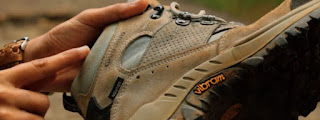
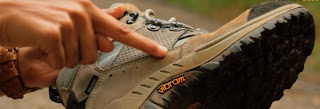
You have a dizzying array of choices, from ultralight trail shoes to mountaineering boots.Understanding a  little more about what goes into uppers, lowers, mid-soles, out-soles and other parts of a boot can help you refine your selection. No one ever loved a pair of ill-fitting boots. The difference between blisters and bliss is taking the time to get a great fit. 


Trekking shoes are one of the essential equipment when it comes to trekking in India or Nepal, especially in the Himalayas. It can break or make your trek, especially while trekking in the high altitude regions of the Himalayas. Your dream walk boots will synchronise with where and how you walk. But you must also be certain that they are a perfect fit before you tie the knot.


Trekking shoe is very different from your normal running or sports shoes. There are a lot of features in the shoe that help you get through different kinds of terrain, weather and support your feet and ankle while you walk.


Key features of trekking shoes are :

1. Good grip and traction for all different kinds of terrains without slippage.

2. Built material which helps protect your feet from getting hurt or twisted.

3. Waterproofing for different kinds of weather.

4. Durability and usage for a long period of time.

5. Cushioning, comfort and breathability for long hour hiking / trekking.


What you should keep in mind before buying a trekking shoe ?


There are four important factors which have to be taken in consideration before you buy trekking shoes :

1) The kind of terrain on which you will be trekking - paved trail or uneven rocky terrain.

2) Duration or the number of days you would be using the shoes, ie weekend treks vs expeditions.

3) Weather conditions on the trek, ie monsoon trek vs snow trek.

4) The weight you will be carrying on you, ie backpack weight.


So, there are three types of shoes you can buy from the market. Hiking shoes which are less expensive and good for short hikes. Trekking shoes for a high altitude trek for a week to 10 days , and Expedition boots for multiple days high altitude with shock resistance and extreme weather. 


HIKING SHOES :


If you are trekking on a well-paved hiking trail like Kheerganga or Nag Tibba, this is the shoes you can get as there is less chance of ankle twisting or your foot getting hurt due to harsh terrain.

Buy hiking shoes when you are trekking in summers  or dry weather as they are made of breathable material but not advisable for rainy or snow trails as they are not waterproof.

Weight of the backpack should be less as hiking shoes are made of flexible soles and low cut with no ankle support.

Hiking shoes are light weight, breathable, flexible sole, low cut with no ankle support. The price normally varies around Rs. 2000/- to Rs. 3500/-.

Some brands available are - Quechua, Forclaz, Adidas, Soloman, Woodland, etc.


TREKKING SHOES :


If you are trekking on an uneven/rocky trail like Hampta pass or Sar Pass or Dhaulagiri trek you have to get a trekking shoe which will give you more ankle and feet support as it is made of stiffer construction.

This is a shoe for all weather as it is waterproof and can be bought when going on a snow trek or monsoon trek.

If you are going on multiple day hikes / treks you can get these as it helps reduce the burden on feet and ankles.

On multiple day hikes / treks, the load of the bag will be much more so the stiffer material gives your leg muscles the support it requires.

Trekking shoes are heavier / stiffer material for toe and feet support, mid-size ankle support, good anti-slip outer sole. The price is around Rs. 4000/- to Rs. 6500/-.

Some brands available are - Quechua, Woodland, Wildcraft, Solomon, etc.


EXPEDITION BOOTS :

These boots are great for any type of weather mostly during extreme cold weather as they have extra insulation for your feet.

If you are going on a long expedition choose these boots for ankle and leg support as well as comfort.

Expeditions will require you to wear heavy clothing and backpack which in turn puts a lot of pressure on the feet. With good ankle and leg muscle support and slip resistance feature will keep your feet intact.

Expedition boots have high rise for ankle and leg support, shock resistance, anti slip resistant and good insulation for extreme weather. The price range will be around Rs. 5,000/- to Rs. 10,000/- .

Some brands available in India are - Dynafit, La Sportiva, etc.


HOW TO SELECT YOUR TREKKING SHOES ?


Concentrating on our today's blog title - HOW TO SELECT YOUR TREKKING SHOES, let us understand it's construction and aesthetic which determine the durability and comfort of the shoes.


The trekking shoe has 3 main components to it's construction : The upper, mid sole, and the outside sole.


1. The Upper : the upper part affects the shoe's weight, longevity and water resistance. The upper layer is also important to ensure that your feet are ventilated properly. The top section of the shoes consists mainly of two substances - Leather and synthetic. 

The best way to ensure longevity, safety and comfort are to have leather shoes. Aesthetics and waterproofing are influenced by the form of timber. But you can use synthetic leather with the same versatility as leather if you want your shoes to be a vegan option. 


2. Mid sole : "Sole is the Soul of a shoe", it is the sole that a shoe is comfortable & stable. This keeps the shoes comfortable and coats the feet. Therefore, it is difficult for a sole to shield you on rough, rocky terrain from an abrasive shock. Ethylene-vinyl acetate and polyurethane are the most popular materials you can find in your sole. 


3. Outer sole : The lug patterns of your shoes at the bottom determine your grip on mountain trekking. It facilitates your grip on mountain trekking. It facilitates your journey by gravel, trail or ground. The deeper and denser the pattern of the lug, the more it tracts your feet. 

The elevated area of the heel at the foot of your shoe, also known as the brake, reduces your chance of descending steeply. 


Some of the Best Trekking Shoes available in India :


Find below some of the best trekking shoes available in India with an average rating of most than 4 out of 5 by customers. This list has been prepared after comparing more than 54+  shoes by different brands like Solomon, Quechua, Wildcraft, Adidas, Columbia, and Woodland on different websites like Amazon, Decathlon store, Flipkart & Wildcraft stores. The price range of these trekking shoes is from Rs. 3,000/- to Rs. 13,500/- (prices may vary according to time & offers) :

1. Solomon Synthetic Quest Prime GTX mid ankle hiking shoe.

2. Forclaz Trek100 men's trekking shoe.

3. Quechua women's hiking shoes MH100- Brown.

4. Woodland men's boot - Grey.

5. Quechua Forclaz 100 mid WTP shoes for men.

6. Columbia Men's Redmond Mid waterproof hiking shoes for men.

7. Columbia women's Newton Ridge Plus Sued Leather trekking shoe.

8. Quechua men's snow hiking shoes SH520 X-Warm mid.

9. Wildcraft Hypagrip TRKNiQ X (trekking shoe for women).

10. Wildcraft Hypagrip TRKNiQ Argon 2.0 (trekking shoe for men).

11. Furo by Red Chief for men's hiking shoes. 


Myself have noticed that, trekkers are perpetually confused about which trekking shoes to buy. There are so many options in the market these days, with costs climbing as high as Rs.35,000/-. 


Most of the trekkers want to own a pair of trekking shoes, instead of getting a pair on rent. Which is why I started looking out for good trekking shoes that do not burn a hole in your pocket.


Many of my trekking friends have suggested the NH150 Trekking Hiking Shoes by Quechua, Decathlon*. Which is why I wanted to test it out. This shoe was tested on the Gidara Bugyal trek, a moderate-difficult Himalayan trek, in snow, slush and small stream-crossing. This shoe is very much budget friendly at Rs. 2500/- approx. 


Decathlon marks this as off-roading hiking shoes, rather as trekking shoe, as a result most trekkers hesitate to buy this for a Himalayan trek wondering whether it will work or not. 


This shoe was tested on 4 aspects - Grip in the shoe, Ankle support, Flexibility of the sole, and Water repellent. 


Grip in the shoe - 

the sole is "cross contact sole" , this similar patern as in high end models of Decathlon shoes and many other shoes which cost Rs.5000 - Rs.7000/- . This worked perfectly well on the Gidara Bugyal Trek. 


Ankle support - 

in this respect many people doubt this shoe, but are not to be blamed because it has a very soft ankle support & people think that it needs to be more firm and padded to actually support your ankles. But this is not true, as it is the length of the ankle support that matters , this shoe with mid ankle length works perfectly well. 


Flexibility & cushioning of the sole -

this sole is extremely flexible, it worked great when on boulders when feet are in awkward positions. You feel an extension of your feet. 


Water repellent or waterproofing of the shoe - 

It performed well when walking in water as well, also while walking on shin deep snow it came out without getting wet. Parts on the top surface got bit wet but dried up pretty quick. The in-sole and socks did not get wet. 


At the end of the day if you ask me , I would definitely say yes, go for this shoe . Most people think the more you spend, the higher the quality of the shoe., if you ask me it is an endless journey. I always believe in - "SPEND LESS AND TREK MORE". You can even use this shoe even for tougher Himalayan treks like - Buran Ghati, Kedarkantha, Deoria Tal, Rupin pass, Goechala, and similar. This shoe will easily  last you on 6 - 7 Himalayan treks of this calibre. 


If you have used this shoe for yourself, would love to know your experience of it, drop in your comment below, even for any doubts write to me at partha63.pd@gmail.com .  


Do FOLLOW my BLOG PAGE for latest updates on FITNESS.


- My Facebook Page :       Fit & Fun After 50

- My YouTube channel :       fitnessfun50

- Follow me on TWITTER :  @ParthaD44328477

- Instagram :                         fitnessfun.50

- e-mail :                               partha63.pd@gmail.com


*This is not a sponsored Blog.

Monday, October 11, 2021

DOWNHILL TECHNIQUE & STAMINA BUILDING TIPS FOR TREKKERS.


DOWNHILL TECHNIQUE & STAMINA BUILDING TIPS FOR TREKKERS.


In my this blog you will learn two very vital aspects of trekking, especially if you are on a mountain trail. While training for an upcoming trek these are the two aspects on which little emphasis is given by the budding trekkers, even by some of the seasoned trekkers. Neglecting these two aspects may turn your trek into a nightmare.


DOWNHILL TECHNIQUE :


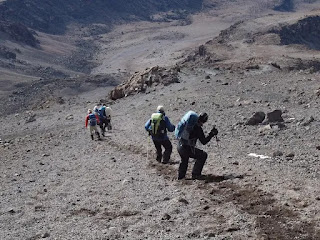
During your trek when you start out on long descends, you often find that uphill climb was easier. This is because most of you do not know the right technique of descending and end up with bad knee and toe pain. There is a right technique of descending down a slope, which myself will mention in this blog.


One of the most important part during a mountain trek is going down, here are few techniques to go down faster and safer : 


1. Visualise - look about 6-7 steps ahead and close, to anticipate where to put the feet and the trajectory.


2. Know the terrain - is it rocky, grass, wet, dry, snow, lose gravel, & so on , or a mix terrain.


3. The balance & gravity centre - use your body too keep the gravity centre on the centre or front of you.


4. Keep your knee joint lose - most trekkers keep their joints tight during descent as a result adds lot of pressure on their knees. Keep your knees lose, you should have a kind of spring in your step while you are going downhill, so to have more agility and flexibility while you are coming down.


5. Do not arrest your descending speed - most trekkers tend to slow down because they feel scared of going too fast downhill, this adds lot of pressure on their knees and toes. So, do not slow down, always go gravity as much as possible. If you think you are going too fast, then use trekking poles for more stability and to control your speed.


6. Use a trekking poles - this is very important especially while descending, it reduces your energy consumption by 40%. It also acts as your third leg. If you have 2 poles then you can come down easily like an animal. It is very easy when you use your poles when you descend, it gives you lot of balance and stability. 


7.  Put your heel down first and then your toe - when climbing down, put your heel down first then your toe,..... heel - toe..... heel - toe...... heel - toe....... always like that. If you put your toe down first then you are putting a lot of pressure on your toes, it is going to hit the inside of your shoes, resulting in blue toe nails , blisters and pain. 


8. Lean back to lower your centre of gravity - while going down lean a little backward so that you lower your centre of gravity, that way you can maintain a good balance while descending. 


9. Take a zig-zag path -  when you are coming down a steep slope, try to take a criss-cross  or a zig-zag path especially if it is a flat surfaced slope, that way you will reduce the gradient gradient that you are coming down, and the descend will be easier for you. 


10. Take side-step - do not come down with your toes pointing front, take side steps so that you have more surface area gripping the surface and will not slip, it is also easier to criss-cross down the slope in this way. 


11. Step on flat surfaces - always find flat surface to put your foot on, there might be rocky trails, gravels on the trail. This has to be kept in mind.


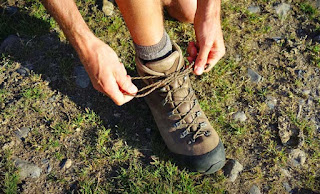
12. Tie your shoes tight - while going down make sure your shoe laces are tied very tight, so that you ankle is supported well with the ankle support of your shoes, and your feet should not slip down and hit the inside front part of your shoes, this will cause your toe pain. 


These are some of the right techniques to follow when you are going downhill or descend.


STAMINA BUILDING TIPS FOR TREKKERS :


Whenever  you think of trekking, you must know that the experience of trekking can only be blissful when you are well prepared for it. If you are unfit for trekking, then for sure your pleasure will turn into pain. 

So, how do you build stamina for trekking ? 

Thus before trekking , you need to build your inner stamina and endurance for which you need to follow the following tips :


1. Going for small trekking - remember that trekking is all about inner core strength and stamina. If you have low stamina and endurance it would be difficult for you to go on any trekking. 


Thus if you go small hiking after every 20-25 days, it will help you adjust to the pressure during trekking. Apart from this, it will enable your body to get prepared for sudden blood pressure change, altitude variation etc.

2. Start eating healthy - healthy eating is very necessary. A light body weight personis able to carry himself at a longer distance than fat or overweight person. 


Thus, the better you eat or consume, the more you detoxify your body. Try making small meals so that you get adjusted to healthy eating.


3. Be active - we know that off season activity can be tiring or boring or might be even difficult, but it is very important to make yourself active during the off season as well.


The more active you are, the more your body will get adjusted to various climate and atmospheric pressures. 


4. Weekday endurance activity - for building your core for hiking you need to get yourself trained. 


Try to do the cardio activity more than muscle training activity. Start with low-intensity cardio and with increasing the intensity level every day so that your core gets strong.


5. Weekend endurance activity - on your weekends go for a small marathon. This will help you build your inner core strength as well as prepare you for long runs.


The more you run and the more you are into cardio, it will help you get prepared for your trekking. 


6. Never skip your workouts - workouts are very necessary for hiking. As our main aim is to build the stamina, endurance and weight management. 


One should remember that workouts play a great role in building your endurance level strong. The more you train yourself, the more you make yourself better. 


7. Be focused - the focus is very much necessary. A strong focus and will power you have, the more yo are going to get trek-fit . 

Without focus and will power it would be difficult to move forward in training for a trek. Thus stay focused. 


Trekking can only be done successfully if you have passion for it. Without passion, nothing would be easy to achieve. All the above tips mentioned to build stamina, endurance for trekking can only be achieved if you have the inner passion to work towards it.


IMPORTANT : 

💪 It is always advisable to consult your doctor / a qualified instructor before starting any new exercise routine. 

Your valued comments, questions & suggestions in the comment section below, about this blog will be highly appreciated.


Do FOLLOW my BLOG PAGE for latest updates on FITNESS.


- My Facebook Page :        @fitnessfun50

- My YouTube channel :       fitnessfun50

- Follow me on TWITTER :  @ParthaD44328477

- Instagram :                         fitnessfun.50

- e-mail :                               partha63.pd@gmail.com